Top 10 Alternative Wood Options for Sustainable Sourcing?
As global concerns over deforestation and environmental sustainability grow, the demand for Alternative Wood options is rising. Traditional wood sources, such as oak and mahogany, have contributed significantly to ecosystem degradation. The World Wildlife Fund estimates that over 13 million hectares of forests are lost each year. This alarming rate paves the way for exploring alternative materials that are both sustainable and visually appealing.
Alternative Wood presents a solution that aligns with eco-friendly practices. Sources like bamboo and reclaimed wood are gaining traction due to their lower environmental impact. According to a report by the Forest Stewardship Council, 85% of consumers now prefer sustainable products when making purchase decisions. Manufacturers and architects can contribute to a greener future by integrating these materials into their designs. However, some alternatives may lack the durability or aesthetic qualities of traditional woods.
This ongoing exploration into Alternative Wood reminds us to balance sustainability with quality. As we innovate, the need for transparency in sourcing and production becomes paramount. Not all alternatives are equal, and careful consideration is essential to ensure that we preserve ecological integrity while meeting consumer demands.

Top 10 Alternative Wood Options for Sustainable Sourcing
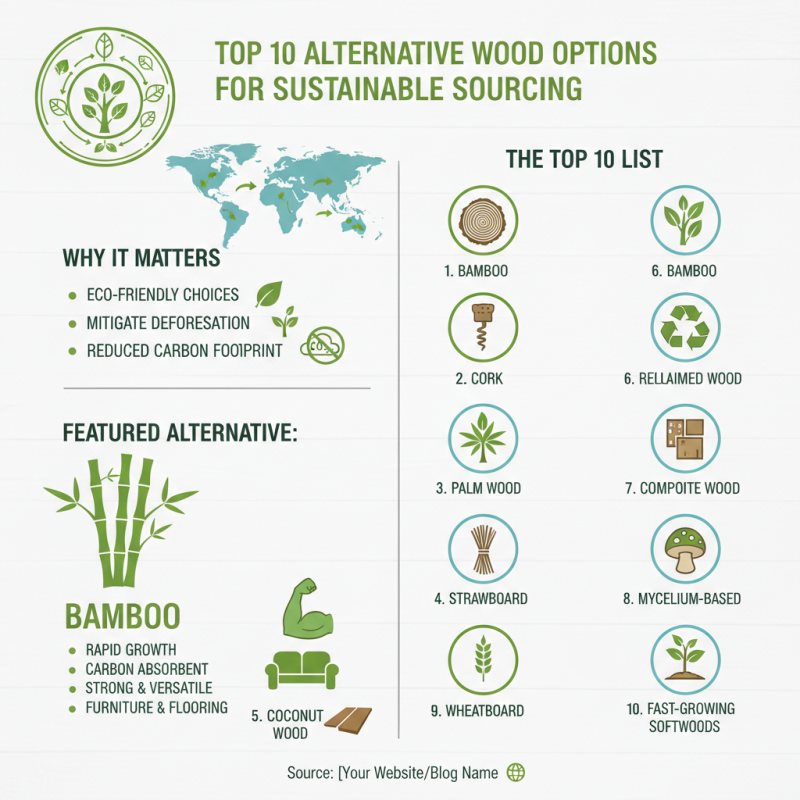
Sustainable sourcing is crucial in today’s environmental landscape. Alternative wood options are gaining popularity. They provide eco-friendly choices that can help mitigate deforestation. Bamboo is one such material. It grows quickly and absorbs carbon efficiently. Its strength and versatility make it an excellent option for furniture and flooring.
Recycled wood is another sustainable choice. It repurposes old timber, reducing waste and energy use. This option often carries a unique history, adding character to any project. However, it may require more effort to source and process. Sustainability should balance aesthetics and practicality. Using palm wood is also gaining attention. This material arises from discarded palm trees. It offers a unique aesthetic while supporting local economies.
Cork is harvested from the bark of cork oaks. This process doesn't harm the tree, allowing it to regrow. However, sourcing can be limited to specific regions. Each alternative wood option comes with its challenges and considerations. It is essential to weigh these factors. Thoughtful choices can lead to more sustainable and responsible sourcing practices.
Overview of the Environmental Impact of Traditional Wood Sourcing
Sourcing traditional wood has a significant environmental impact. Logging often leads to deforestation. This process affects biodiversity, destroying habitats for countless species. Moreover, it contributes to soil erosion and changes in water cycles. When trees are removed, the entire ecosystem suffers. Local communities reliant on forests face economic challenges.
The carbon footprint of wood transportation is also concerning. Harvested timber travels long distances to reach consumers. This transport emits greenhouse gases. The cultivation of certain tree species can further worsen the situation. Monoculture practices deplete soil nutrients and create vulnerability to pests. Many assume that wood is a sustainable product, but its impact can vary widely.
Exploring alternative wood options is important. Bamboo, for example, grows rapidly and requires less water. It sequesters carbon effectively. Other materials, such as reclaimed wood, reduce the need for new harvesting. These options can offer significant benefits. However, not all alternatives are without flaws. Some substitutes may not be as durable. Careful consideration of each material’s lifecycle is necessary. Sustainability requires continuous reflection on our choices.
Top 10 Alternative Wood Options for Sustainable Sourcing
| Alternative Wood Option |
Source Type |
Sustainability Rating |
Environmental Impact |
| Bamboo |
Grass |
High |
Rapidly renewable; absorbs CO2 |
| Cork |
Tree Bark |
High |
Harvesting does not harm trees |
| Reclaimed Wood |
Used Materials |
Very High |
Reduces waste; less demand for new wood |
| Hemp |
Plant |
High |
Sustainable; grows quickly |
| Palm Wood |
Palm Trees |
Moderate |
Utilizes by-products of palm oil industry |
| Engineered Wood (e.g., MDF) |
Composite |
Moderate |
Using waste product for furniture |
| Straw Board |
Crop By-product |
High |
Reduces agricultural waste |
| Lyptus |
Hybrid Eucalyptus |
Moderate |
Fast-growing; controlled growth management |
| Alpine Wood |
Mountain Forests |
High |
Sustainably harvested in remote areas |
| FSC Certified Wood |
Forest |
Very High |
Follows strict sustainability regulations |
Bamboo: The Fast-Growing Alternative for Sustainable Construction
Bamboo is rapidly becoming a popular choice for sustainable construction. Its fast growth makes it an appealing alternative to traditional hardwoods. In fact, bamboo can mature in just three to five years, far quicker than most trees. This attribute not only allows for quicker harvesting, but also helps reduce deforestation pressures.
The flexibility and strength of bamboo are remarkable. It is often stronger than steel when compared by weight. This characteristic makes it suitable for a variety of construction applications, from flooring to structural elements. However, there are challenges that need attention. The environmental impact of processing bamboo can be significant. Pesticides and chemical treatments are often used, raising concerns about sustainability.
Moreover, the market for bamboo products can be inconsistent. Not all bamboo is created equal; quality can vary widely. Consumers and builders may face difficulties in sourcing reliable products. Navigating this landscape requires careful selection and evaluation. Responsible sourcing is key to ensuring that bamboo fulfills its potential as a truly sustainable material.
Recycled Wood: Reducing Waste and Promoting Circular Economy
Recycled wood has emerged as a popular choice for sustainable sourcing. It addresses the urgent need to reduce waste and promotes a circular economy. Repurposing wood from old furniture, pallets, or construction sites minimizes the demand for virgin timber. This approach reduces deforestation and lowers carbon emissions. Using recycled wood not only conserves resources but also adds character to new projects.
When considering recycled wood, look for quality and safety. Ensure the wood is free from harmful chemicals, especially if used in furniture or home décor. Each piece should reflect its history, showcasing unique patterns and textures. However, be aware that the quality can vary. Some recycled wood may require additional treatment to achieve desired durability.
Tips for sourcing recycled wood:
1. Check local sources before buying new.
2. Visit deconstruction sites for unique finds.
3. Consider the story behind each piece; it adds value.
Finding reliable, quality recycled wood can be challenging. Some suppliers may not fully disclose the wood's origin or history. This lack of transparency is a concern. Always ask questions and research the supplier. Wise choices are essential for a truly sustainable approach.
Paulownia: A Renewable Option with High Growth Rates
Paulownia trees, often called "Princess Trees," are remarkable for their rapid growth and sustainability. These trees can grow up to 10 feet in a single year, making them an excellent choice for renewable forestry. They thrive in various climates, which makes them versatile. The wood they produce is lightweight yet extremely strong, perfect for multiple applications.
Tips for sourcing Paulownia: Look for environmentally certified nurseries that prioritize sustainable practices. Harvesting should be done responsibly to maintain the ecosystem. This wood can replace traditional hardwoods in furniture and construction, helping reduce the strain on endangered tree species.
Another aspect to consider is the regeneration of Paulownia trees. After harvesting, they can sprout new growth from the stump. This natural regrowth minimizes the need for replanting and conserves resources. However, it's essential to monitor the growth to prevent monoculture issues. Encourage diverse planting to support local wildlife.
The use of Paulownia wood offers an eco-friendly alternative. It has the potential to revolutionize sustainable sourcing. However, awareness of local environmental impacts is crucial. Make educated choices when selecting your materials.
Top 10 Alternative Wood Options for Sustainable Sourcing
Conclusion
The article "Top 10 Alternative Wood Options for Sustainable Sourcing" explores various sustainable materials that can replace traditional wood, emphasizing their environmental benefits. Traditional wood sourcing often leads to deforestation and habitat destruction; thus, alternative wood options are crucial in addressing these issues.
Prominent alternatives include bamboo, which grows rapidly and is highly versatile for construction; recycled wood, which promotes a circular economy by reducing waste; and Paulownia, known for its impressive growth rates. Additionally, engineered wood products offer a balance of strength and sustainability, making them suitable for diverse applications. Together, these alternative wood options represent a significant shift towards more sustainable sourcing practices in the industry.