
Leave Your Message

How to Choose WPC Wall Cladding in 2026?

Choosing WPC Wall Cladding in 2026 requires more than matching a colour to a house. The right system must suit weather, wall structure, drainage, and everyday maintenance. A coastal balcony faces salt, wind, and intense sunlight. A shaded garden wall faces moisture and algae. These conditions can change the best product choice.

“Performance begins with the installation environment, not the product brochure,” says Dr. Michael G. Turner, a composite-materials consultant with experience in exterior building products. His point deserves attention. Many buyers compare surface patterns first. They overlook expansion gaps, fixing methods, and ventilation behind the panels. That mistake can become visible when hot afternoon temperatures cause movement.

A reliable selection process examines the panel’s composition, density, profile, fire documentation, colour stability, and warranty terms. It also checks whether replacement boards remain available. A realistic sample should be viewed outdoors, not under a showroom lamp. Touch it. Inspect the edges. Look for consistent texture and clean machining.

No material is perfect. WPC Wall Cladding may resist rot better than untreated timber, yet it can still stain, fade, or expand. Claims such as “maintenance-free” deserve careful questioning. A soft brush and mild cleaner may be enough, but neglected drainage can create larger problems.

This guide explores how to compare WPC Wall Cladding products in 2026. It considers climate, building orientation, design, installation quality, lifecycle cost, and responsible sourcing. The goal is not to choose the cheapest panel. It is to choose a system that remains practical after the first impressive photograph.
How to Choose WPC Wall Cladding in 2026?

Define WPC Wall Cladding and Its Main Applications

How to Choose WPC Wall Cladding in 2026?

WPC wall cladding means wood-plastic composite wall panels. Manufacturers blend wood flour or fibers with thermoplastic polymers and performance additives. The mixture is usually extruded into boards, slats, or hollow profiles. Its appearance resembles timber, but its moisture resistance and dimensional stability can be higher.

The material serves several applications. Exterior façades, balcony screens, garden walls, and covered entrances are common choices. Interior feature walls and commercial reception areas also use WPC for warm visual texture.

Grand View Research reported that the global wood-plastic composites market reached approximately USD 7.63 billion in 2023. The report projects a 7.2% compound annual growth rate from 2024 to 2030. This growth reflects wider interest in durable, low-maintenance building materials.

Performance still depends on formulation and installation. Check technical sheets for water absorption, flexural strength, UV resistance, and fire classification. EN 15534 provides relevant test methods for wood-polymer composite profiles.

A façade exposed to afternoon sun needs expansion gaps and suitable substructure spacing. Dark boards may become noticeably warmer. That detail is easy to miss.

WPC is not automatically waterproof, fireproof, or maintenance-free. I have seen attractive samples fail when installers ignored ventilation behind the panels. In 2026, compare verified test data, warranty conditions, recycled content, and local climate suitability before choosing a profile.
Compare Core Materials, Profiles, Textures, and Surface Finishes

How to Choose WPC Wall Cladding in 2026?

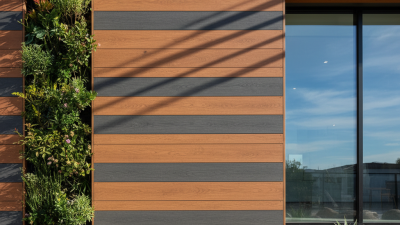
When comparing WPC wall cladding, start with the core material. Wood-plastic composites usually balance a natural appearance with moisture resistance. Mineral-filled polymers can feel more rigid and reduce movement under temperature changes. Recycled content may support sustainability, but it can also create color variation. Ask for water absorption, fire behavior, UV exposure, and expansion data. Looks are not enough. On warm exterior walls, poor allowance for movement can cause open joints or buckling.

Profile design affects installation and long-term drainage. Hollow boards reduce weight, while solid boards offer stronger impact resistance. Slatted profiles create deeper shadows and can hide uneven walls. Flat profiles look cleaner but reveal poor alignment quickly. Check the clip system, ventilation gap, corner details, and access for replacement. Measure twice. A small mistake near a window can disturb the entire pattern.

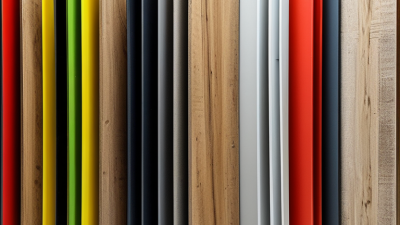
Texture and surface finish change both appearance and maintenance. Brushed grain feels subtle under the hand, while deep embossing hides dust and minor scratches better. Matte finishes usually look more natural, but glossy surfaces may show marks in strong sunlight. A co-extruded protective layer can improve stain and UV resistance, although it may not prevent damage from furniture or tools. Request samples outdoors, not only under showroom lighting. I still think choosing texture by photograph is unreliable; daylight, touch, and nearby materials often change the decision.

Evaluate Weather Resistance, Safety, Durability, and Maintenance Needs

How to Choose WPC Wall Cladding in 2026?

When choosing WPC wall cladding, start with the local weather, not the surface color. In coastal areas, salt, wind, and constant humidity can expose weak materials quickly. Ask for test data covering water absorption, UV stability, and temperature changes. A sample should remain straight after several days outdoors. Look closely at its edges. Swollen corners suggest poor moisture control. I once trusted a smooth, attractive board without checking its drainage design. That assumption was wrong.

Safety deserves equal attention. Request fire-performance documents and confirm they meet applicable building requirements in your region. Check whether the product has tested limits for smoke and harmful emissions. Installation also matters. Leave the recommended expansion gaps, especially where summer temperatures rise sharply. Hidden ventilation can prevent trapped moisture behind the panels. Small details matter. A safe board can still create problems when installed against a damp wall.

Durability depends on daily exposure and maintenance habits. Choose a finish that can tolerate sunlight without rapid fading or surface chalking. Wash dust with clean water and mild soap rather than aggressive chemicals. Inspect joints, fasteners, and lower edges twice a year. Replace damaged sections early. This is not always convenient. Some cleaning instructions sound simple but become difficult on a tall façade. Therefore, evaluate access, labor, and repair costs before purchasing. A five-year sample warranty may not reflect actual performance in your climate. Ask for installation records, independent test reports, and clear maintenance instructions.

Match Cladding Dimensions, Colors, and Styles to Your Building

Choosing WPC wall cladding in 2026 starts with the building’s proportions, not a color chart. Measure wall height, window spacing, corner returns, and installation direction. Long boards can make a narrow façade appear wider, while shorter modules may suit a compact extension. Allow space for movement around joints and edges. Small errors become visible quickly.

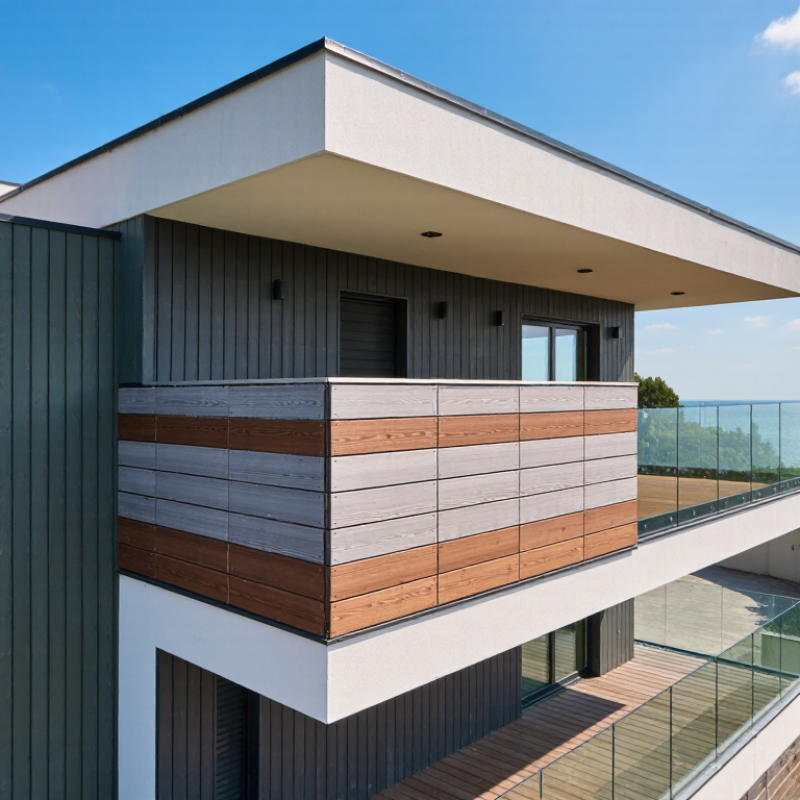
For exterior walls, select dimensions that reduce unnecessary cuts and support proper ventilation behind the cladding. A 150–200 mm visible width often creates a balanced appearance, but the best choice depends on scale. Dark colors absorb more heat in strong sunlight, especially on south-facing walls. Warm brown tones can soften concrete, while gray or charcoal works well with glass and metal. Request physical samples. Screens can distort color.

Style should follow the building’s character and maintenance expectations. Use vertical lines to emphasize height on a low structure. Choose horizontal boards for a broader, calmer impression. A subtle wood grain usually ages more quietly than a dramatic pattern. I once preferred a deep walnut shade for a bright renovation, but the sample looked harsh beside white render. The final, lighter tone worked better. That changed my view.

Check slip-free access around windows and confirm the system’s fixing, drainage, and fire-performance requirements with qualified installers and local regulations. WPC is not maintenance-free. Dust, algae, and fading still need attention. Plan for cleaning access before installation, not after the first rainy season.

How to Choose WPC Wall Cladding in 2026? - Match Cladding Dimensions, Colors, and Styles to Your Building

Building Type Recommended Profile Typical Width × Thickness Typical Effective Coverage Suitable Colors Recommended Style Key Selection Considerations
Single-family house Hollow or capped WPC board with concealed clips 140–170 mm × 20–25 mm Approx. 130–160 mm after joint spacing Warm oak, teak, walnut, charcoal, light grey Horizontal wood-grain boards or mixed-width façade Choose UV-resistant finishes for sun-facing elevations and allow movement gaps at board ends.
Modern townhouse Narrow-groove or slatted WPC profile 90–120 mm × 18–22 mm Approx. 80–110 mm Black, graphite, dark brown, silver grey Vertical lines, symmetrical spacing, or contrasting feature panels Narrower boards emphasize height; use a consistent batten layout around windows and doors.
Apartment or multi-unit building Capped exterior-grade board with mechanically fixed subframe 150–200 mm × 22–28 mm Approx. 140–190 mm Medium oak, stone grey, taupe, muted brown Large horizontal bands with selected vertical accents Confirm local fire, wind-load, façade, and compartmentation requirements before specifying the product.
Commercial office Low-maintenance capped WPC façade panel 160–220 mm × 20–30 mm Approx. 150–210 mm Natural brown, medium grey, dark grey, muted green Clean horizontal modules or restrained two-tone zoning Use consistent batch color, accessible replacement boards, and a ventilated rainscreen arrangement where required.
Retail or hospitality façade Solid or reinforced WPC profile for high-traffic areas 100–180 mm × 20–30 mm Approx. 90–170 mm Teak, walnut, black, terracotta, natural grey Feature wall, entrance frame, vertical fins, or patterned installation Prioritize scratch resistance, stain cleaning, corner detailing, and replaceable fixing components.
Balcony, terrace, or privacy screen Solid or reinforced slatted WPC board 80–150 mm × 20–35 mm Approx. 70–140 mm Brown, grey, black, bamboo tone Vertical privacy screen or alternating slat pattern Check span limits, wind exposure, drainage, and the structural capacity of the supporting frame.
Coastal or high-humidity building Capped, moisture-resistant WPC profile with corrosion-resistant fixings 140–180 mm × 22–28 mm Approx. 130–170 mm Light grey, weathered oak, sand, medium brown Simple horizontal layout with open drainage details Use stainless or otherwise corrosion-resistant fasteners and avoid blocking ventilation or drainage paths.
Renovation or accent wall Lightweight hollow or decorative slatted profile 70–150 mm × 12–20 mm Approx. 60–140 mm Oak, walnut, black, white, concrete grey Vertical slats, headboard wall, entrance feature, or partial cladding Check whether the product is approved for interior or exterior use and prepare a flat, dry, load-bearing substrate.

2026 WPC Wall Cladding Selection Checklist

Dimension or Performance Factor Practical Guideline Why It Matters
Board length Common lengths are approximately 2.9–5.8 m; select lengths that reduce unnecessary joints. Fewer joints can improve visual continuity and reduce cutting waste.
Board spacing Follow the specified clip system and maintain the manufacturer’s recommended end and side gaps. WPC expands and contracts with temperature changes; restricted movement can cause buckling.
Ventilated cavity Use a drained and ventilated subframe where the façade design or local code requires a rainscreen. Ventilation helps manage moisture behind the cladding.
Color stability Request weathering data and use lighter colors in locations with intense solar exposure when practical. All exterior materials can experience color change from ultraviolet exposure and weathering.
Fire performance Verify the tested classification for the complete wall assembly, not only the board. Fire performance depends on the cladding, cavity, insulation, substrate, and installation details.
Finish and texture Use wood grain for residential warmth, smooth matte surfaces for contemporary buildings, and slats for rhythm and shadow. Texture and board direction strongly affect perceived building scale and façade character.

Note: Dimensions and coverage figures are typical market ranges for WPC wall-cladding profiles. Always confirm the approved span, fixing method, fire classification, wind-load capacity, expansion gaps, and installation requirements for the selected product and local building regulations.

Check Installation Methods, Supplier Standards, Costs, and Warranties

How to Choose WPC Wall Cladding in 2026?

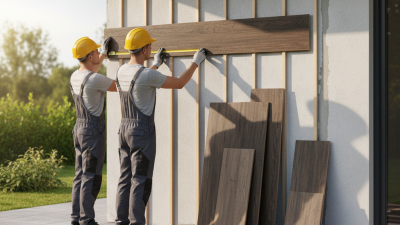
Installation method should match the building, not only the product brochure. For exterior walls, concealed clips create clean lines, while stainless-steel screws allow easier panel replacement. Leave expansion gaps at corners and around windows. WPC changes size with temperature. EN 15534 and ASTM D7031 provide useful benchmarks for composite performance, but compliance documents must match the exact panel model. Ask suppliers for test reports, batch details, fire classification, and installation drawings. Missing documents are a warning sign.

Cost comparisons need more than a square-metre price. Include subframes, trims, fasteners, labor, delivery, and future repairs. Grand View Research estimated the global wood-plastic composites market at about USD 7.5 billion in 2023, with continued growth through 2030. Growing demand does not guarantee consistent quality. Some low-cost panels may fade or warp sooner. A five-year warranty sounds attractive, but check its exclusions, required maintenance, color-fade limits, and claim process. A warranty without installation support is weaker than it appears.

Tips: Request three itemized quotations. Test a sample outdoors for several weeks. Check whether the supplier offers replacement panels from the same production line. Confirm fire, moisture, and slip-related data where relevant. Photograph the subframe before closing the wall. I would not choose the cheapest quote automatically; however, premium pricing alone proves little. Ask difficult questions early.

How to Choose WPC Wall Cladding in 2026?

Indicative comparison of common installation methods, supplier standards, installed costs, and typical warranty coverage.

Costs are indicative 2026 market ranges in USD per square metre, including typical installation materials and labor but excluding taxes, site preparation, and complex access requirements. Clip-and-rail systems generally install faster, while direct-fix systems can be more economical on suitable, even substrates. For supplier evaluation, prioritize documented UV and weathering tests, batch quality control, installation guidance, and clearly defined warranty terms.